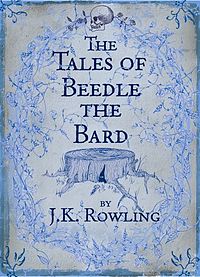
[EN] The Tales of Beedle the Bard - J.K. Rowling

Aucun commentaire:
Title: The Tales of Beedle the Bard
Author: J.K. Rowling
Publisher: Bloomsbury
Release date: 2008
Pages: 109


*'In the fond hope, my son, that you will never need it.'*
_________________________________ 

The Tales of Beedle the Bard contains five richly diverse fairy tales, each with its own magical character, that will variously bring delight, laughter and the thrill of mortal peril.
Additional notes for each story penned by Professor Albus Dumbledore will be enjoyed by Muggles and wizerds alike as the Professor nurses on the morals illuminated by the tales, and reveals snippets of information about life at Hogwarts.
A uniquely magical volume, with illustrations by the author, J.K. Rowling, that will be treasured for years to come.
_________________________________

 *But which f us would have shown the wisdom of the third brother, if offered to pick of Death's gifts? Wizards and muggles alike are imbued with a lust for power; how many would resist 'the Wand of Destiny'? Which human being, having lost someone they loved, could withstand the temptation of the Resurrection Stone?*


I received The Tales of Beedle the Bard for my birthday last year, but I wanted to make it last as long as I could so I had only read the first two tales. The Challenge des 4 maisons, hosted by Bulle de mots, seemed to be the perfect opportunity to read it and I was not able to put it down before I had finished it.
There are two levels on which the book can be read: the tales themselves, of course, but the context is maybe even more interesting. J.K. Rowling introduces us to a piece of wizarding culture and manages to make the Harry Potter universe even more real. It is a book that Ron might have read when he was a boy, that most wizards know, and that Dumbledore himself researched, as shown by the “historical” notes.
Harry Potter fans are of course familiar with the Tale of the Three Brothers, featured in Harry Potter and the Deathly Hallows, but reading the whole story without the context of the war makes one pay attention to details that would not have been noticed otherwise. The explanatory notes also give it another dimension which might interest older readers, while the younger will focus on the story.
Five different tales are gathered in the book: “The Wizard and the Hopping Pot”, “The Fountain of Fair Fortune”, “The Warlock’s Hairy Heart”, “Babbitty Rabbitty and her Cackling Stump” and “The Tales of the Three brothers”. All of them have a moral which can be compared to that of muggle traditional fairy tales… with a few differences regarding the use of magic. One of the recurring themes is the relationship between muggles and wizards, which I can imagine would be important in some families.
Tales are important in a child’s life and culture and this is true in the muggle world as well as in the wizarding world. Good will usually prevail against evil, but it is not a general rule, as we can see in “The Warlock’s Hairy Heart”. If you think about the brothers Grimm, Andersen or Perrault’s tales however, you will soon notice that they can be rather violent too (their original version at least, before they were adapted to be suitable for children at least).
In this short book, J.K. Rowling gathers all the main ingredients for a successful collection of tales: magic and unusual characters or occurrences, moral elements, symbolic aspects… and the fact that each story can be read on several levels, by children or by adults.
_________________________________


* In short *

A nice collection of tales which will no doubt delight children and adults alike. A must read for all the wizarding fans.


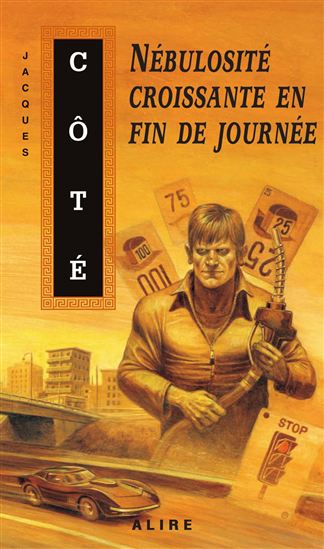


[FR] Nébulosité croissante en fin de journée - Jacques Côté

2 commentaires:


Titre : Nébulosité croissante en fin de journée
Auteur : Jacques Côté
Éditeur : Alire
Date de publication : 2000
Pages : 365
 

* Duval tiqua en voyant la carcasse de ce qui avait été un bolide sur lequel des yeux admiratifs s'étaient posés. La fibre de verre avait fondu. On aurait dit une sculpture moderne, informe, toute roussie. De la guimauve caramélisée. *
_________________________________ 

Juin 1976...
Alors qu'une terrible canicule s'abat sur tout le Québec, les jeux Olympiques de Montréal se profilent à l'horizon. Mais à Sainte-Foy, en banlieue de la Vieille Capitale, H se soucie peu de la chaleur et des jeux. À peine sorti de prison, il perd le nouvel emploi qui était censé consacrer sa réinsertion sociale. Des gens devront payer pour ce nouvel échec.
Daniel Duval, lui, est enquêteur à la Sûreté du Québec. À son retour d'un marathon, il fait face à un cas difficile : un psychopathe s'amuse à canarder des automobilistes sur le boulevard Duplessis. En compagnie de son coéquipier Louis Harel, il tente désespérément de mettre la main au collet du tireur fou afin d'éviter d'autres meurtres gratuits.
Or, les deux policiers ne connaissent pas la passion morbide de H pour la démolition automobile... ni sa ferme intention de se payer la peau d'un flic !
_________________________________ 

* Sur le viaduc, des badauds à la curiosité morbide admiraient le spectacle. C'était le viaduc depuis lequel on avait tiré le conducteur de la Corvette. En agent d'expérience qu'il était, Duval observa les gens agglutinés. L'homme qu'il cherchait êtait jeune, vingt ou vingt-deux ans, peu instruit, jamais rassasié de violence, et il circulait à pied. Il entretenait un rapport ambivalent avec les automobiles. Une sorte de pyromane des routes à la recherche d'une minute de gloire.


Et c’est parti pour LA saga policière québécoise à ne pas manquer ! Daniel Duval, enquêteur à la Sûreté du Québec et coureur marathonien chevronné se lance sur la piste d’un jeune fou qui a une véritable passion pour les accidents de voiture ; H est tout juste sorti de prison, mais tout va mal pour lui. Heureusement, il est intelligent, et a tout prévu pour se venger.
La grande force du roman, c’est ses personnages, auxquels il est impossible de ne pas s’attacher. Les scènes tournant autour de l’enquête dominent, mais les petits aperçus que Jacques Côté nous donne de la vie privée des personnages les rendent plus humains. La passion de Daniel pour la course à pied renforce aussi sans doute cette idée. Il ne vit pas que pour son travail. Les personnages ne sont pas des super héros à qui rien ne résiste ; ils font aussi des erreurs et des mauvais choix, et il n’en paraissent que plus réalistes. On s’attendrait presque à les croiser dans la rue !
Le récit retrace principalement l’enquête menée par Daniel et son coéquipier, Louis Harel, mais certains chapitres sont racontés du point de vue de H, le criminel qu’ils poursuivent. Vous vous demandez sans doute si je ne suis pas en train de gâcher le suspense. Je vous rassure tout de suite, ce n’est pas le cas. C’est quelque chose que les lecteurs découvrent très rapidement, et ce n’est pas l’identité du criminel qui crée le suspense.
Je pense en réalité que le fait de savoir qui est responsable dès le début est un très bon moyen de créer une attente chez le lecteur ; je m’explique. De courts chapitres nous plongent dans la tête de H. Il apparaît clairement qu’il est dérangé, mais il a tout de même un côté humain auquel il est difficile de rester indifférent. Il est certes violent et dangereux, mais la chance n’a jamais été de son côté et il presque impossible de le détester tout à fait. Tout en espérant qu’il soit arrêté, je me suis prise à éprouver une sorte de compassion pour lui, à certains moments… jusqu’à ce que l’enchaînement de décisions qu’il prend me fasse changer d’avis. Quoi qu’il en soit, on se demande à chaque page comment toute cette histoire va se terminer.
L’intrigue en elle-même m’a beaucoup plu. Il y a un côté « vintage » à lire une histoire qui se passe en 1976, sans que les nouvelles technologies ne soient omniprésentes. On se concentre sur le facteur humain plus que sur les machines, et j’ai trouvé qu’il était très agréable de suivre une vraie enquête de terrain, où on a l’impression que le policier a réellement une influence sur l’issue de l’enquête.
Le milieu dans lequel évoluent les personnages est intéressant, et la manière de commettre les crimes plutôt originale. On se retrouve plongé dans le monde des voitures et des courses automobiles un peu particulières et, même si ce n’est pas un sujet que vous trouvez particulièrement intéressant, vous ne pourrez pas vous empêcher de trouver cet univers fascinant.
À bientôt pour la suite de la saga !
______________________________


* En bref... * 

Un roman policier québécois un peu « vintage » à ne pas manquer, que ce soit pour son intrigue originale, pour ses personnages attachants, pour son suspense particulier, pour son univers particulier ou pour la beauté de la plume de l’auteur.


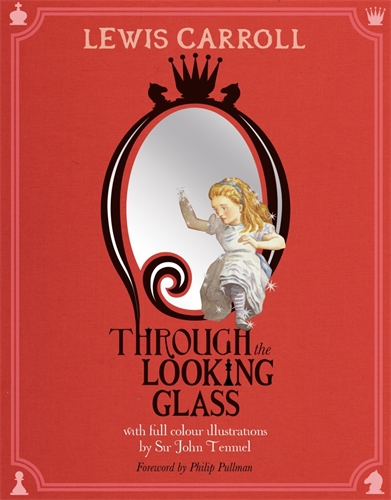
[EN] Through the Looking Glass (and What Alice Found There) - Lewis Carroll

Aucun commentaire:
Title: Through the Looking Glass (And What Alice Found There)
Author: Lewis Carroll
Publisher: Macmillan
Release date: 2015 (first published 1871)
Pages: 245


*Well then, the books are something like our books, only the words go the wrong way; I know that because I've held up one of our books to the glass, and then they hold up one in the other room.*
_________________________________ 

Alice's second adventure takes her through the looking-glass to place even curiouser than Wonderland. She finds herself caught up in the great looking-glass chess game and sets off to become a queen. It isn't as easy as she expects: at every step she is hindered by nonsense characters who crop up and insist on reciting poems. Some of these poems, such as "The Walrus and the Carpenter" and "Jabberwocky", are as famous as the Alice stories themselves.
_________________________________

 *'To answer the door?' he said. 'What's it been asking of?'*


After rather enjoying Alice’s Adventures in Wonderland, I decided to try reading Through the looking glass (and what Alice found there). I was delighted to discover a book containing all the aspects I had liked in the first one, and fewer parts I found less interesting.
Although the basic idea and the style are the same, I found that fewer similarities than I had expected between the two books. Alice is still the main character and I thought she had not changed at all in the first few pages. However, as soon as she is on the other side of the looking glass, she behaves in a less childish way. Instead of sometimes being annoying or self-important, as well as very argumentative, she is merely curious… which is what most children are. She has obviously grown up – literally or not – since her adventures in the rabbit hole.
Looking glass world is also very different from Wonderland. Although some traits of absurd remain, it is easier to have a general idea of what is going on, which I personally enjoyed. The animals and creatures, although present, are less important; conversely, the author pays much more attention to the landscape and the different places Alice visits. I was enchanted by all the details and the musicality of the writing style, which is once again a great strength of the novel.
Some readers might be disappointed not to find the Cheshire cat or the Mad hatter, who have become symbols of Alice’s adventures, but Looking Glass world is definitely worth discovering too. This book is maybe less typical of Lewis Carroll than the first one, but it still contains all the ingredients of the absurd genre, as well as characters and landscape that will make the reader travel far away. The style is easy to read and elegant and will probably please all readers, even those who are not convinced about nonsense literature.
_________________________________


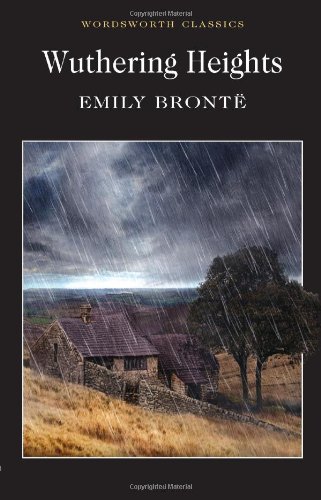
[EN] Wuthering Heights - Emily Brontë

Aucun commentaire:
Title: Wuthering Heights
Author: Emily Brontë
Publisher: Wordsworth Classics
Release date: 1997 (first published 1847)
Pages: 245


*Catherine's face was just like the landscape - shadows and sunshine flitting over it in rapid succession; but the shadows rested longer, and the sunshine was more transient; and her poor little heart reproached itself for even that passing forgetfullness of its care.*
_________________________________ 

Set on the stormy moors of northern England, this classic novel is filled with the cruel and ecstatic love between the characters Heathcliff and Catherine. As they grow together as children and later as lovers, the conflicts of class and an all-consuming passion overwhelm the inhabitants of Wuthering Heights.
_________________________________

 *Treachery and violence are a just return for treachery and violence.*


One of the famous classics which I had never read, Wuthering Heights definitely lived up to my expectations. Set in rural England, it is a great saga recounting the story of two families whose fates irrevocably intertwine. Three generations live in their secluded world, ruled by hate and love, hope and vengeance.
First published in 1847, Wuthering Heights was considered shocking and only received little attention. In order to enjoy it for what it is, the reader must keep in mind the historical context – the importance of religion and of class in England – in which it was published and the personal background of the author; for Emily Brontë, like her characters, lived a solitary life in Yorkshire. Her writing style and the vocabulary she uses might seem old-fashioned and discourage those who are not used to them, but there are several editions with many useful explanatory notes to facilitate readers’ understanding. The variety of the English used by the characters adds to the realism of the story, and Joseph’s impression of the Yorkshire accent is exceptional – if sometimes a little difficult to understand.
I found the first few chapters difficult to understand, mostly because I was confused about who was who. Scenes from two different periods were described within a few pages and several characters bear the same name. As the plot develops, everything becomes much clearer and it is then possible to enjoy the story and the two different narrators. The descriptions are very important; very precise, full of details and vivid, they build the gothic atmosphere which is so specific to the book. Whuthering Heights seems to be constantly shrouded in darkness, home to heartless protagonists and haunted by the ghosts of its past. I sometimes felt the setting was another character, echoing the actions of the main protagonists.
Most characters seem rather violent, monstrous even. The main protagonists cannot help being cruel and we constantly wonder about their motives. Are they driven by their desire of revenge, by love, or by personal interest? Are they trying to be good, but external circumstances shape them, or were they born this way? Their universe is limited to two houses, Wuthering Heights and Thrushcross Grange, and it sometimes seem completely different from the rest of the world; the rules civilised people are supposed to follow are bent according to the characters’ motivations. As we will soon find out, the main protagonists’ presence is so strong that they do not even need to be present to convey the impression that a happy ending is impossible.
The tone is melodramatic, but not overdone. As the two main protagonists make way for their children, we can catch glimpses of hope and happiness every now and then; in the end, it is not really a tragedy, but rather a mix of several genres, which makes the novel extraordinary. Given the author’s provocative writing and the sensitive questions she deals with, I can however fully understand why the novel was controversial when it was first published.
Wuthering Heights is a classic everybody should read. It is rather different from other novels published at that time and deals with several interesting and modern questions. The characters can be perceived either as caricatures, or as extreme cases. Both interpretations are interesting and can add to the gothic atmosphere. Are you ready to go back to early 19th century Yorkshire?
_________________________________


Challenge des 4 maisons

Aucun commentaire:


Challenge des 4 maisons
Organisé par Bulle de mots
Du 15 août au 29 août 2016

_______________________

Eh oui, je me laisse une fois de plus tenter par un challenge qu'il va être difficile de terminer ! Je sais que j'ai dit que je serais raisonnable, mais lisez la suite, vous allez comprendre pourquoi je dois absolument participer !

Vous l'aurez sans doute compris, c'est un challenge en rapport avec Harry Potter. Le but ? En deux semaines, lire au moins 7 livres (comme le nombre de tomes de la saga) et 4119 pages (le nombre de pages cumulées de tous les tomes de la saga en français) pour rapporter des points à notre maison.  
Le nombre de pages et de livres sont la condition pour que le challenge soit réussi. Il y a ensuite d'autres critères qui peuvent nous rapporter des points supplémentaires. Voici la liste avec les titres que je prévois de lire.

Team Serdaigle pour moi !

Rappel Tout : un livre depuis si longtemps dans ta PAL que tu l'avais oublié (10 pts). 
- Wuthering Heights, Emily Brontë, 464 p. => Un livre qui est dans ma PAL depuis des années...
Retourneur de temps : un livre que relis (5 pts).
- ouvert
Tournoi des trois sorciers : un livre qui représente un réel défi pour toi (10 pts).
- Un dimanche à la piscine à Kigali, Gil Courtemanche, 326 p. => Ce livre est un défi pour son contenu plus que pour sa forme. Il traite du génocide tutsi, un sujet qui me touche beaucoup... et il me rappellera sans doute mon séjour au Rwanda.
Poudlard : un livre qui va t'apprendre des choses (10 pts).
- Her Ladyship's guide to the Queen's English, 160 p. =>  Un livre qui a l'air intéressant et drôle, qui m'apprendra des choses sur la langue anglaise (et toutes les fautes que je fais sans m'en rendre compte)
Choixpeau : un livre tiré au sort parmi quatre (15 pts).
- La piste mongole, Christian Garcin, 365 p. => Les trois autres livres choisis étaient Le poisson-scorpion de Nicolas Bouvier, Annabelle de Marie Laberge et  La malédiction de la Rainha Filipa de Gérard Janichon.
Un livre aux couleurs de votre maison à Poudlard (5 pts).
- Sans rien ni personne, Marie Laberge, 433 p. => Un livre bleu, bleu, bleu... (autre option : All the Light we cannot see, d'Anthony Doerr ou The Miniaturist, de  Jessie Burton)
Polynectar : un livre qui te met dans la peau d'un personnage complétement différent de toi (10 pts).
- Donde los árboles cantan, Laura Gallego, 475 p. => Viana, l'héroïne, est fille de duc, noble et promise en mariage dès son enfance à Robian
Loups garous : un livre à ne pas lire la nuit (10 pts).
- Apartment 16, Adam Nevill, 459 p. => Le nom de l'auteur suffit à justifier mon choix !
Nimbus 2000 : un livre que tu dois lire en une journée (15 pts).
- The Tales of Beedle the Bard, J.K. Rowling, 109 p. => Un petit livre que je gardais pour une occasion spéciale. Quoi de mieux que de le lire pour un challenge Harry Potter ?!
Dragée mystère : un livre que tu abordes mitigé (10 pts).
- The Fellowship of the Ring, J.R.R. Tolkien, 535 p. => Un livre que je prévois de lire depuis longtemps, mais tant les bouts de film que j'ai vus que les extraits que j'ai lus me font penser que je ne l'apprécierai peut-être pas autant que prévu. EDIT : Changement de plan, j'ai décidé de m'atteler à Fifty Shades of Grey finalement...
Relecture d'un Harry Potter (10 pts)
- Harry Potter and the Cursed Child, Jack Thorne, 343 p. => Sachant que j'ai relus tous les autres plusieurs fois pour mon mémoire et que j'ai littéralement dévoré ce dernier tome, c'est l'occasion de découvrir des détails auxquels je n'ai pas forcément prêté attention plus tôt.
Un livre qui a été adapté au cinéma (5 pts).
- Eat, pray, love, Elizabeth Gilbert, 350 p. => Pour que je puisse finalement regarder le film avec ma soeur après coup
Un livre qui compte des créatures fantastiques (licorne, dragon, gobelins...) (5 pts).
- Through the Looking Glass, and what Alice found there, Lewis Carroll, 228 p. => Pas très inspirée pour cette catégorie, mais ça devrait fonctionner, non ?
Un livre paru chez Gallimard (5 pts).
- Vol de nuit, d'Antoine de Saint Exupéry, 188 p. => Un livre que j'ai envie de lire depuis très longtemps... 

Et voilà, challenge terminé... Bon, il faut avouer que j'ai fait quelques changements par rapport à ce que j'avais prévu, et que je n'ai pas réussi à lire tout ce qui était prévu.
Mais le compte y est, même si avec ma mauvais habitude de commencer plusieurs livres en même temps, j'en ai encore trois en cours. J'ai validé toutes les catégories, sauf loups-garous, car j'ai eu du mal à me plonger dans Apartment 16 (que je n'ai toujours pas terminé). 
Les chroniques de ce que j'ai lu pour le challenge suivront prochainement...
Et soyez attentifs, une nouvelle édition du challenge sera sans doute organisée bientôt !

11/7 livres
4138 / 4119 pages
130 pts
- Wuthering Heights, Emily Brontë (Rappel tout, 5 pts, 464 p.)
- Her Ladyship's guide to the Queen's English (Poudlard, 10 pts, 160 p.)
- La piste mongole, Christian Garcin (Choixpeau, 15 pts, 365 p.)
- Sans rien ni personne, Marie Laberge (Couleur de ma maison, 5 pts, 433 p.)
- The Tales of Beedle the Bard, J.K. Rowling (Nimbus 2000, 15 pts, 109 p.)
- Fifty Shades of Grey, E.L. James (Dragée mystère, 10 pts, 514 p.)
- Harry Potter and the Cursed Child, Jack Thorne (relecture HP & retourneur de temps, 15 pts, 343 p.)
- Through the Looking Glass, and what Alice found there, Lewis Carroll (créatures fantastiques, 5 pts, 228 p.)
- Vol de nuit, Antoine de Saint Exupéry (Gallimard & adaptation, 10 pts, 188 p.)
- The New York Trilogy, Paul Auster (Tournoi des 3 sorciers, 10 pts, 308 p.)
- Partition amoureuse, Tatiana de Rosnay (Polynectar, 10 pts, 210 p.)
- Apartment 16, Adam Nevill (420 sur 459 p.)
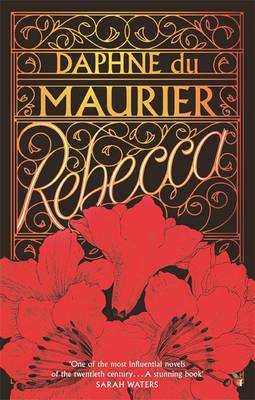
- Rebecca, Daphné du Maurier (93 sur 380 p.)
- Skyfaring, Mark Vanhoenacker (303 sur 352 p.)


Adrian McKinty (1) Alexander Key (1) Alexander Maksik (1) Alexis Hayden (1) Amanda Kyle Williams (1) Ambre Dubois (2) Amélie Nothomb (1) Ange Godart (1) Angélique Ferreira (1) Anita Shreve (1) Ann Patchett (1) Annabelle Valenzuela-Alarcon (1) Arnaldur Indridason (1) Aurélien Molas (1) Bernard Lenteric (1) Carol Higgins Clark (1) Chloé Bourdon (1) Christian Bindner (1) Céline Gierts (1) Dan Brown (1) Dan Millman (1) Danielle Steel (1) Delphine de Vigan (1) Domnica Radulescu (1) Donna Leon (1) Emily Brontë (1) Emylia Hall (1) Erik Larson (1) Franck Thilliez (1) Fred Vargas (2) Gerbrand Bakker (1) Hallgrímur Helgason (1) Henning Mankell (2) Henri Beaudout (1) Henri Lœvenbruck (1) Ian McEwan (1) Inti Salas Rossenbach (1) J.K. Rowling (2) Jack Thorne (1) Jacques Côté (1) Jean-Charles Hue (2) Jenny Sigot Müller (1) Jo Nesbø (1) Jodi Picoult (1) John Brandon (1) John Tiffany (1) John Wyndham (1) José-René Mora (1) Joël Vernet (1) Julia Bell (1) Julien Blanc-Gras (1) Jussi Adler-Olsen (1) Kari Kinard Pratt (1) Kate Atkinson (1) Kent Johnson Olsen (1) L.F. Falconer (1) Laura Gardner (1) Laura Kasischke (1) Lawrence W. Gold (1) Lewis Carroll (2) Lionel Camy (1) M.L. Stedman (1) Malcolm MacKay (1) Marian Izaguirre (1) Marie Laberge (1) Marina Lewycka (1) Markus Zusak (1) Mary Higgins Clark (1) Mary Hoffman (6) Mathieu Dombre (1) Matthias Rouage (1) Michael Morpurgo (3) Michel Bussi (2) Mikkel Birkegaard (1) Misha Defonseca (1) Monica Kristensen (1) Natacha Catel (1) Pablo Mehler (1) Penny Hancock (1) Peter May (1) Philippe H. Besancenet (1) Pierre Thiry (1) Rachid Santaki (1) Rawia Arroum (1) Raymonde Malengreau (1) Rhonda Byrne (1) Riikka Pulkkinen (1) Robert Galbraith (J.K. Rowling) (3) Rodrigo Rey Rosa (1) Rosamund Lupton (1) Ruta Sepetys (1) Ruth Rendell (1) Sandrine Collette (2) Sarah Latham (illustrator) (1) Sarah Singleton (2) Sheri Speede (1) Sofi Oksanen (1) Stef Penney (1) Susanne Mischke (1) Tatiana de Rosnay (5) Victoria Hislop (1) Viveca Sten (1) William Morris (1) Yasmina Khadra (1) Éric-Emmanuel Schmitt (1)

 
Design by Laraemilie